
- English
- Español
- Português
- русский
- Français
- 日本語
- Deutsch
- tiếng Việt
- Italiano
- Nederlands
- ภาษาไทย
- Polski
- 한국어
- Svenska
- magyar
- Malay
- বাংলা ভাষার
- Dansk
- Suomi
- हिन्दी
- Pilipino
- Türkçe
- Gaeilge
- العربية
- Indonesia
- Norsk
- تمل
- český
- ελληνικά
- український
- Javanese
- فارسی
- தமிழ்
- తెలుగు
- नेपाली
- Burmese
- български
- ລາວ
- Latine
- Қазақша
- Euskal
- Azərbaycan
- Slovenský jazyk
- Македонски
- Lietuvos
- Eesti Keel
- Română
- Slovenski
- मराठी
- Srpski језик
Trung Quốc Graphite đẳng hướng Nhà sản xuất, Nhà cung cấp, Nhà máy
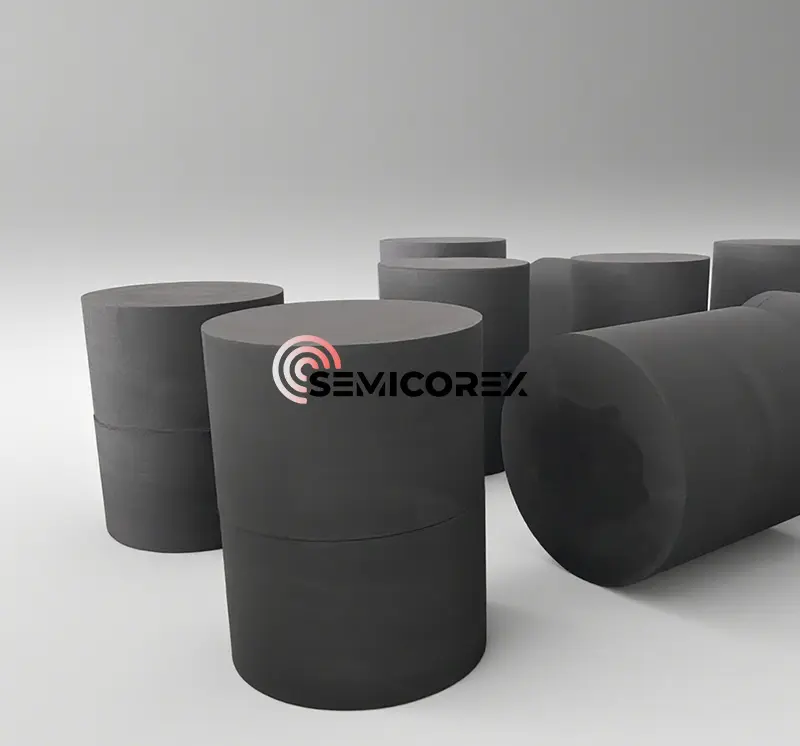
Carbon/graphite material molding essentially involves increasing the density of the powder mixture and ensuring close contact between the aggregate and binder to produce a green body with a desired size, morphology, and minimal machining allowance. The four main molding methods are extrusion, compression molding, vibration molding, and isostatic pressing. Common carbon/graphite materials on the market (for example, charcoal used for household fires) are mostly formed using hot extrusion and compression molding (cold or hot). Isostatic pressing offers superior molding performance.
The principle of isostatic pressing is based on Pascal's law: pressure applied to a medium (liquid or gas) in a sealed container is uniformly distributed in all directions, with the pressure on the surface being proportional to the surface area. Isostatic pressing involves placing a sample, enclosed in a sealed container, within a high-pressure cylinder. Leveraging the incompressible nature of the liquid medium and its ability to uniformly transmit pressure, the sample is uniformly pressed from all directions. When the fluid is injected into the cylinder, the pressure is evenly transmitted in all directions according to the principles of fluid mechanics. The sample in the cylinder is then subjected to uniform pressure in all directions.
Due to the isostatic pressing method, isostatically pressed graphite exhibits excellent isotropy, with properties independent of shape, size, or sampling direction. The material possesses a dense microstructure, high mechanical strength, high surface hardness, and oxidation resistance. Strong performance and high-temperature resistance; the material has excellent thermal shock resistance and is less susceptible to cracking under rapid cooling and heating conditions.
1. Isotropy
Different molding methods result in different properties in different directions. This is primarily reflected in resistivity, thermal conductivity, mechanical properties, and thermal expansion coefficient. The general measurement method is to sample the product perpendicular to and horizontally from the pressure surface, measure the properties separately, and then divide the smallest value by the largest value to obtain the isotropy ratio.
Traditional carbon/graphite products exhibit significant anisotropy, i.e., the properties of the product are different in the directions perpendicular to and horizontal to the pressure surface. The corresponding difference in performance is generally greater than 1:1.1, hence the term anisotropy. In many cases, this difference is fully exploited, and the greater the difference, the better. Examples include graphite electrodes for steelmaking and brushes for motors. Many applications, such as EDM and single-crystal silicon thermal field applications, increasingly require carbon/graphite products to exhibit isotropy (with an orientation ratio within the 1:1.05 range).
2. Large Dimensions
The market is increasingly demanding larger product sizes. For example, single-crystal silicon products have grown from 6- and 8-inch sizes to 12-inch sizes. The size of graphite materials used in thermal fields is also increasing. This is also increasing. Similar trends are seen in other related industries. Graphite for EDM, continuous casting, and nuclear reactors also requires large-scale products. This is difficult to achieve using molding and extrusion methods. The primary problem with large-scale product production is calcination cracking, and the larger the product, the higher the chance of calcination cracking.
3. Fine Structure
As a structural material, it requires high physical and chemical properties. On the one hand, the finer the particle size of the carbon particles that make up the carbon/graphite material, the denser its texture and the higher its mechanical strength.
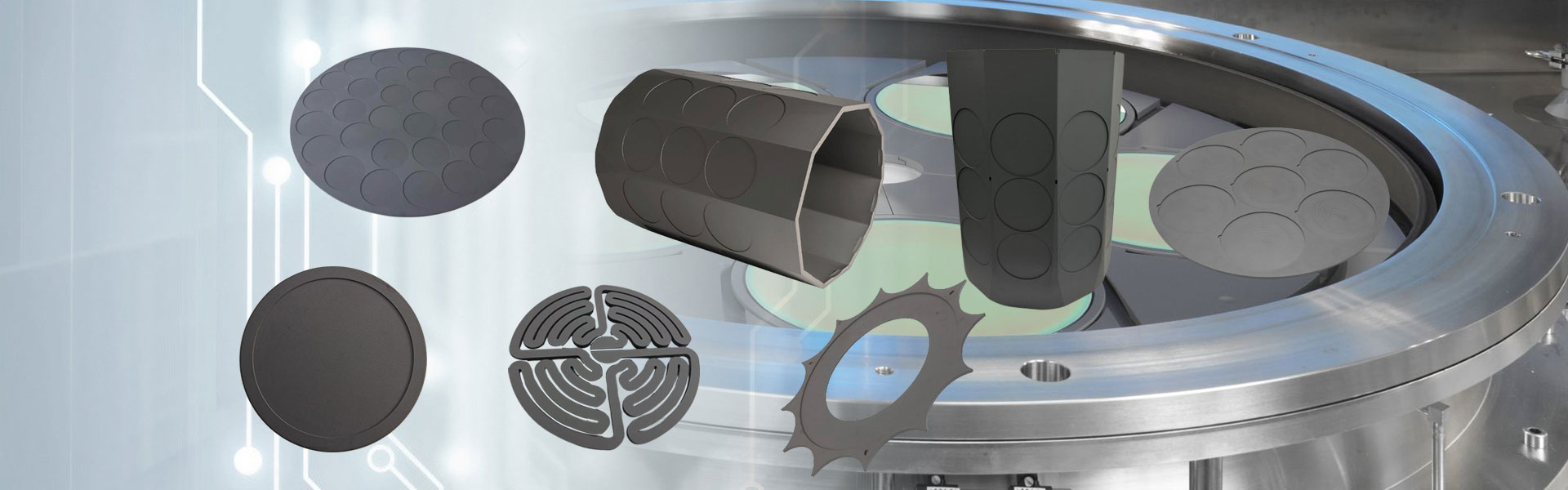
Isostatically pressed graphite is widely used in semiconductor manufacturing processes. It is used in graphite components for the hot zone of single crystal growth furnaces, such as crucibles, heaters, flow guides, and insulation covers; and in graphite components used in epitaxial processes.
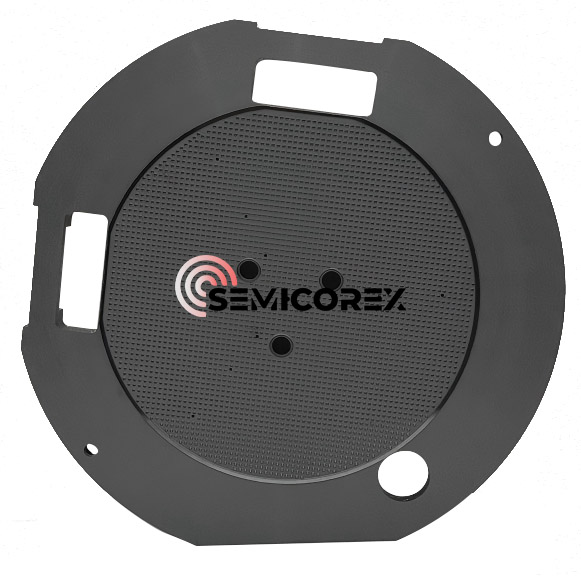
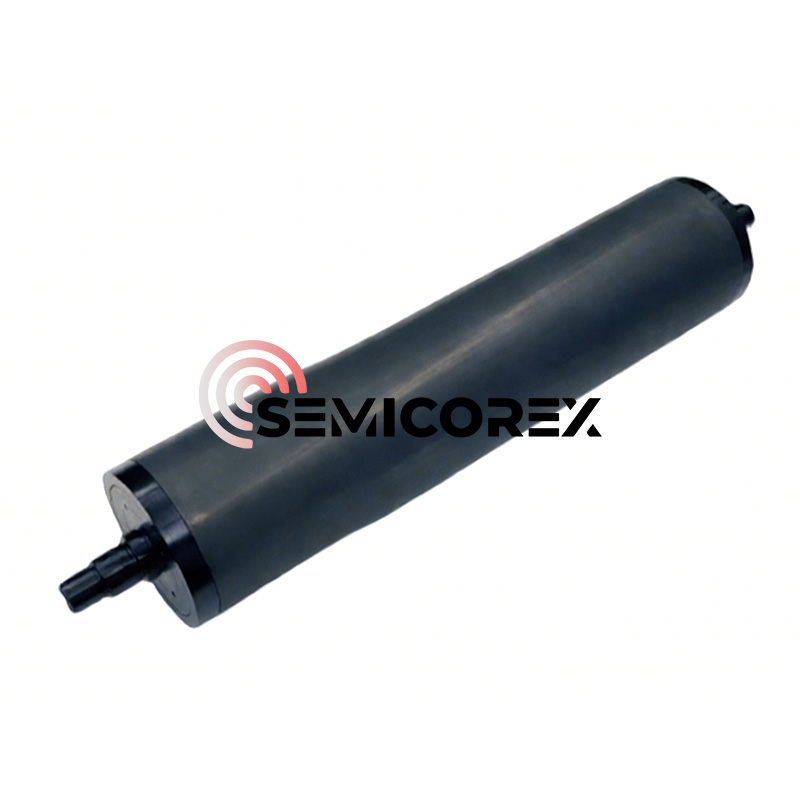
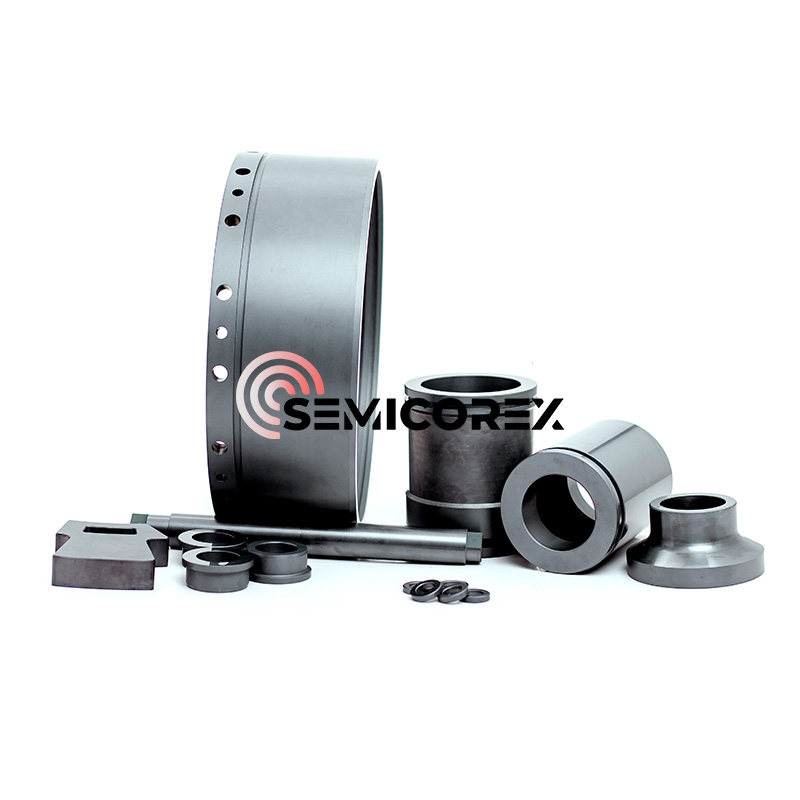
- View as
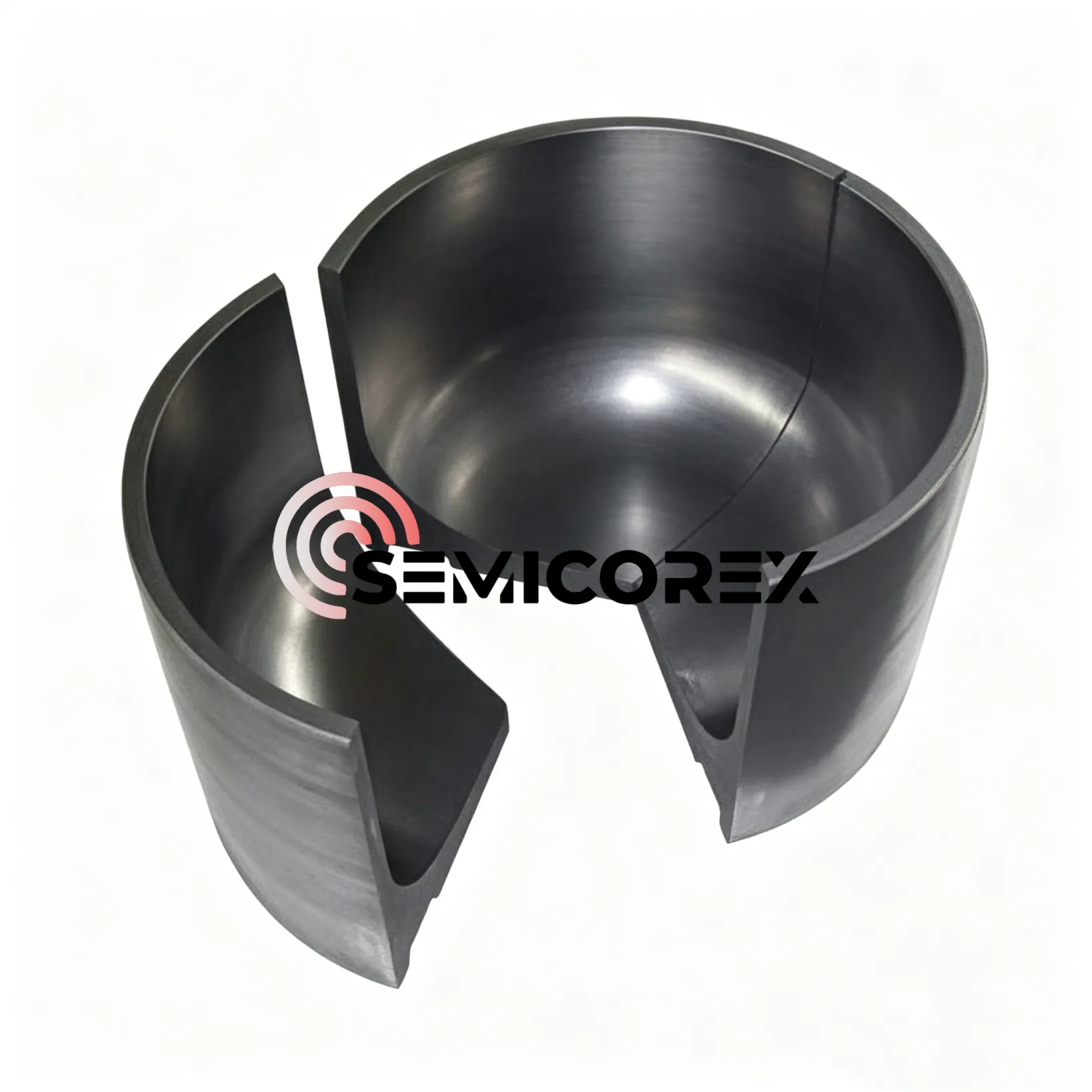
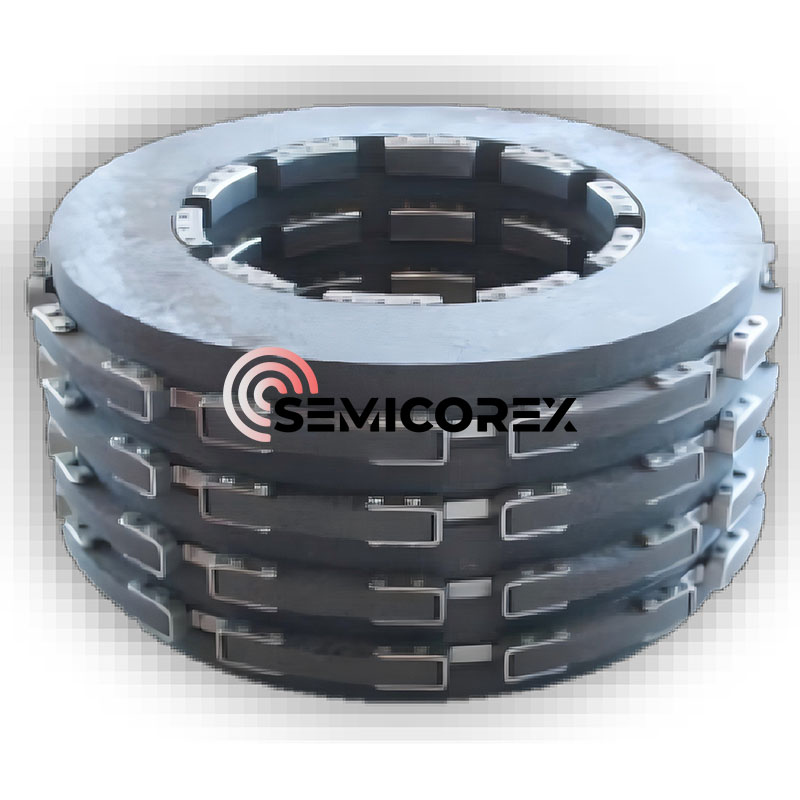
Nồi nấu kim loại than chì ba mảnh
Nồi nấu kim loại than chì ba mảnh Semicorex là các thùng chứa than chì phân chia hiệu suất cao được thiết kế đặc biệt cho các quá trình phát triển silicon đơn tinh thể. Lý tưởng cho xử lý nhiệt bán dẫn cao cấp, chén nung than chì ba mảnh Semicorex có thể hỗ trợ đáng tin cậy cho chén nung thạch anh và các vật liệu bên trong của nó để đạt được sự phát triển có kiểm soát của các cấu trúc đơn tinh thể.
Đọc thêmGửi yêu cầu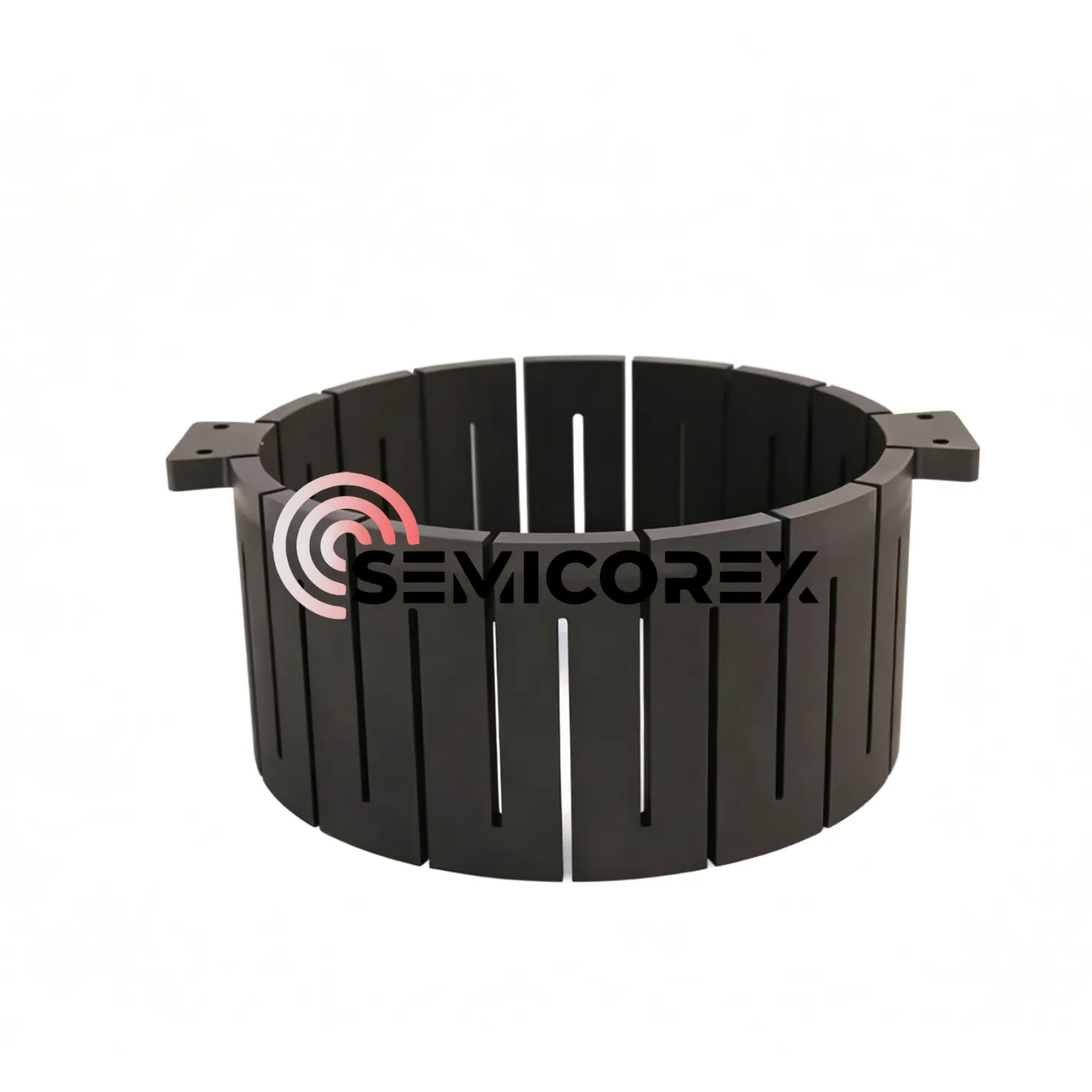
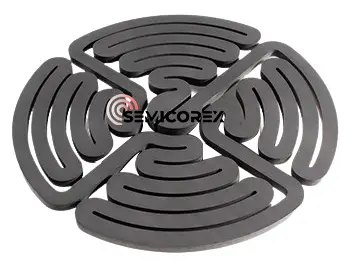
Máy sưởi than chì kiểu tay áo
Lò sưởi than chì dạng ống bọc Semicorex, bộ phận làm nóng hiệu suất cao, được sử dụng rộng rãi trong lò nung đơn tinh thể. Lò sưởi than chì dạng ống bọc Semicorex là bộ phận gia nhiệt quan trọng được sử dụng rộng rãi trong các lò nung đơn tinh thể, được thiết kế đặc biệt để phát triển silicon đơn tinh thể chất lượng cao. Lựa chọn Semicorex là lựa chọn giải pháp xử lý nhiệt lý tưởng.
Đọc thêmGửi yêu cầu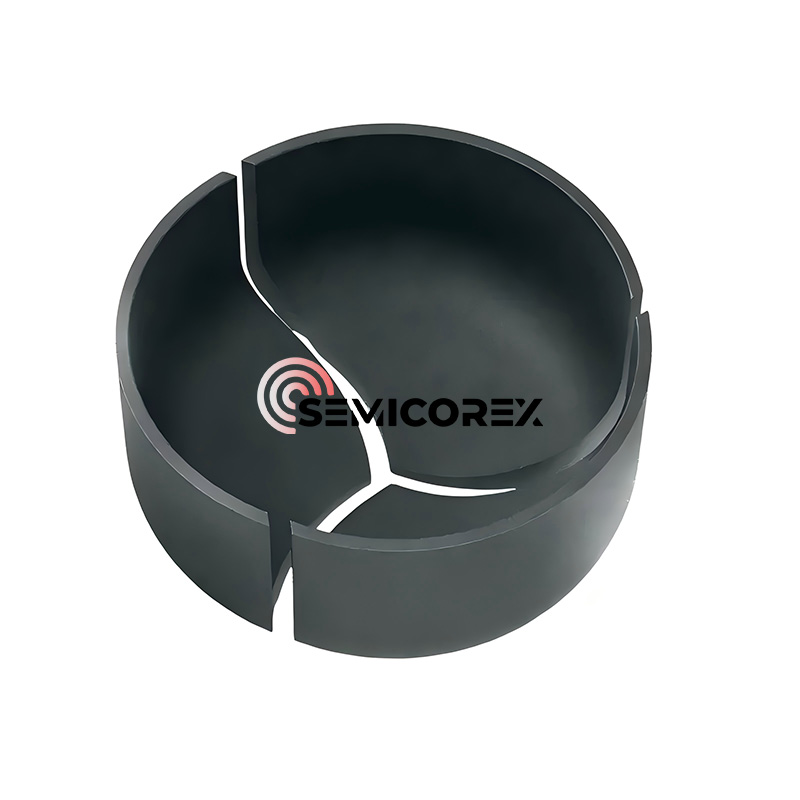
Nồi nấu than chì ba cánh
Nồi nấu kim loại than chì ba cánh có độ tinh khiết cao Semicorex có kiến trúc giảm căng thẳng cải tiến được thiết kế để tối đa hóa năng suất tăng trưởng tinh thể trong môi trường nhiệt bán dẫn khắc nghiệt. Semicorex cung cấp các giải pháp vật liệu bán dẫn đẳng cấp thế giới trên toàn thế giới, hỗ trợ các ngành công nghiệp tiên tiến với các thành phần gốm và than chì được chế tạo chính xác được hỗ trợ bởi dịch vụ hậu cần toàn cầu đáng tin cậy.*
Đọc thêmGửi yêu cầu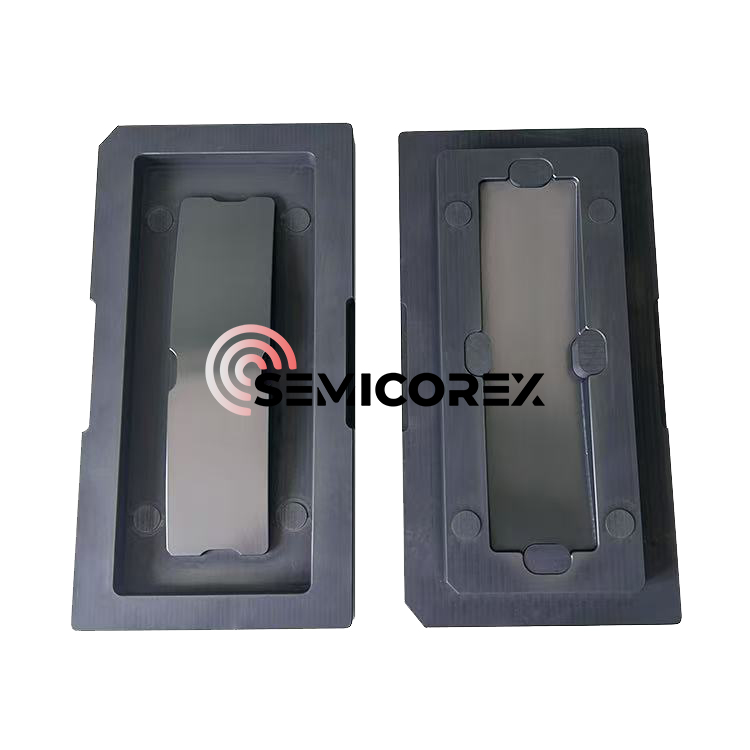
Khuôn than chì thủy tinh uốn nóng
Khuôn than chì thủy tinh uốn nóng Semicorex được thiết kế chính xác từ than chì hạt mịn, có độ tinh khiết cao để mang lại khả năng chịu nhiệt độ cao đặc biệt, ổn định sốc nhiệt, tự bôi trơn và độ bền hóa học, đảm bảo kính cong 3D chất lượng cao với các khuyết tật tối thiểu. Semicorex được chọn nhờ chuyên môn sâu, thiết kế khuôn mẫu tiên tiến và kiểm soát quy trình tỉ mỉ, tối đa hóa năng suất một cách hiệu quả và đáp ứng các yêu cầu sản xuất khắt khe nhất.*
Đọc thêmGửi yêu cầu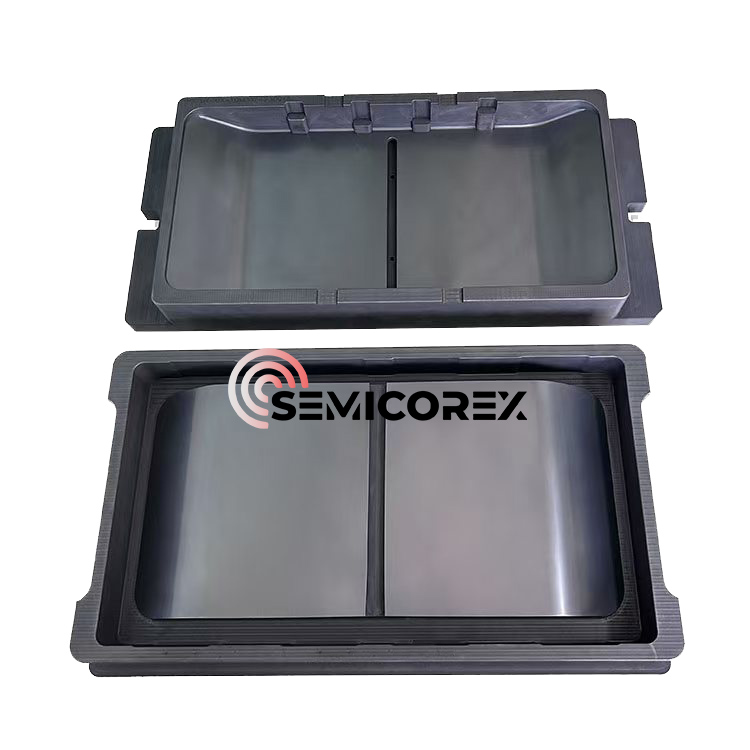
Khuôn than chì thủy tinh uốn nóng 3D
Khuôn than chì thủy tinh uốn nóng Semicorex 3D là khuôn than chì đẳng tĩnh cao cấp được thiết kế cho kính cong 3D uốn nóng, mang lại độ ổn định nhiệt tuyệt vời, tính dẫn nhiệt, chống mài mòn và ăn mòn, cải thiện chất lượng bề mặt kính, kéo dài tuổi thọ khuôn và nâng cao đáng kể hiệu quả và năng suất sản xuất. Semicorex được chọn vì chất lượng đáng tin cậy, nguồn cung ổn định và chuyên môn trong việc cung cấp các giải pháp than chì tiên tiến trên toàn thế giới.*
Đọc thêmGửi yêu cầu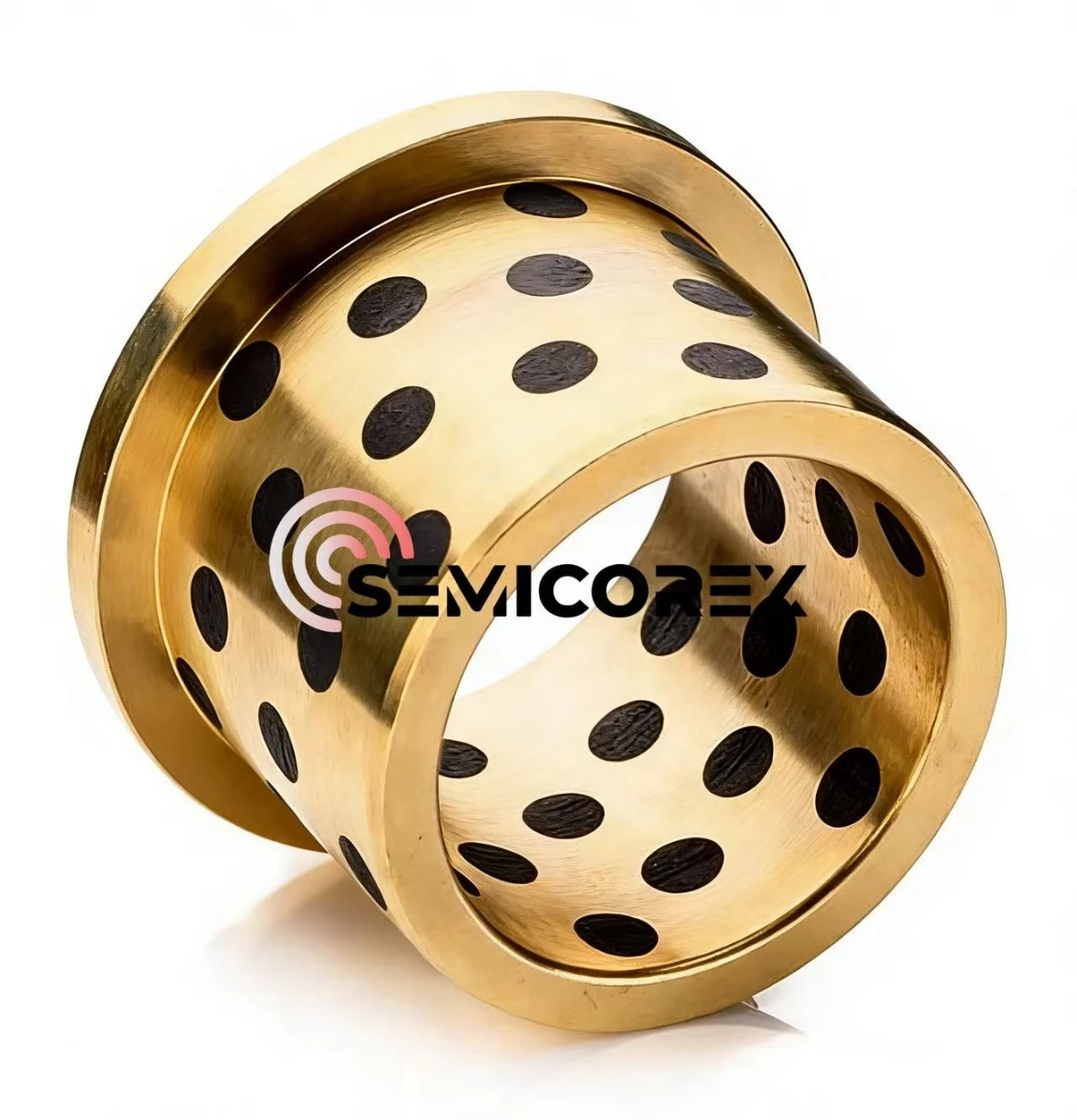
Ống lót tự bôi trơn bằng than chì
Ống lót tự bôi trơn bằng than chì Semicorex, còn được gọi là ống lót không dầu, là bộ phận ổ trục trượt hiệu suất cao được thiết kế đặc biệt để hoạt động mà không cần bôi trơn hoặc cung cấp dầu bên ngoài. Với hiệu suất tuyệt vời, ống lót tự bôi trơn bằng than chì Semicorex là giải pháp lý tưởng cho thiết bị hoạt động trong môi trường phức tạp bao gồm vận hành không dầu, nhiệt độ cao, tải trọng cao, tốc độ thấp, chống bám bẩn, chống ăn mòn và chống bức xạ.
Đọc thêmGửi yêu cầu
Semicorex đã sản xuất Graphite đẳng hướng trong nhiều năm và là một trong những nhà sản xuất và Nhà cung cấp Graphite đẳng hướng chuyên nghiệp tại Trung Quốc. Khi bạn mua các sản phẩm tiên tiến và bền bỉ của chúng tôi cung cấp bao bì số lượng lớn, chúng tôi đảm bảo giao hàng nhanh chóng với số lượng lớn. Trong những năm qua, chúng tôi đã cung cấp cho khách hàng dịch vụ tùy chỉnh. Khách hàng hài lòng với sản phẩm của chúng tôi và dịch vụ tuyệt vời. Chúng tôi chân thành mong muốn trở thành đối tác kinh doanh lâu dài đáng tin cậy của bạn! Chào mừng bạn đến mua sản phẩm từ nhà máy của chúng tôi.